Table of Contents
Whistle Testing
3D printing is great, but things can go wrong. Sometimes, if your settings are wrong, or if the filament doesn't cooperate, or if the model is just fussy, you can end up with a plate of silent whistles. To ensure some amount of QA is done, make sure to test at least one whistle from each plate you produce.
Mechanical Testing
Electronic
These are a great way to test whistles that come off the plate quickly and hygienically.
You can get a handheld compressed-air duster that charges via USB for around USD$30, examples from Amazon and Microcenter.
Video of using an air duster to test whistles:
Some volunteers use handheld vacuums to do the same thing, though they can be louder than the air dusters.
Mechanical
You can use a baby nasal aspirator to test whistles.These are usually USD$1-USD$3 at many stores.
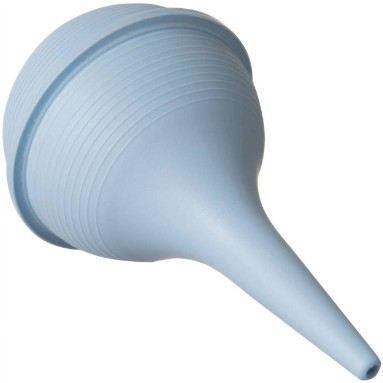
It should be mentioned that you should use either a new baby nasal aspirator, or one well cleaned and sterilized.
Manual Testing
If you don't have any mechanical way to test whistles, you can do so the “old fashioned” way. Just give one a toot! After you confirm the whistle makes noise THROW IT AWAY, no one wants a pre-used whistle.
Loudness Testing
Some whistle modelers on Makerworld, Thingiverse, and Printables have listed the estimated decibel values for their whistles. Others have not. To help make informed decisions, a group of whistle printers tested a selection of whistle models for decibel output.
You can find those results here: db_testing_results_for_selected_models